
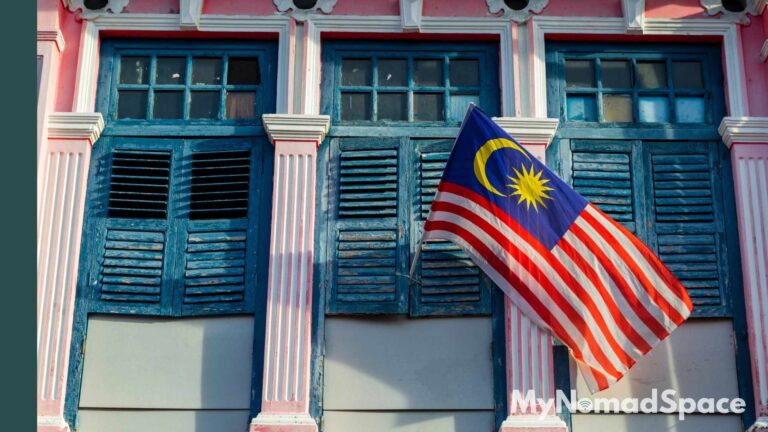
Back in August 2022, we stepped foot in Malaysia for the first time, staying and working remotely in Kuala Lumpur for a couple of weeks. It was the perfect introduction to the country, with the energy and hustle of the city, the warmth and the generosity of the people and, of course, the incredible food we’ve come to love.
Since then, we’ve returned to Malaysia several times, each visit taking us somewhere new, from idyllic islands off the east coast to lively cities and the beautiful landscapes of Borneo. We simply can’t get enough of Malaysia and always find ourselves coming back whenever we’re this side of the world.
Throughout our visits, we’ve stayed and worked remotely in destinations across both Peninsular Malaysia and Borneo, giving us a first-hand feel for what each place has to offer. In no particular order, these are our top picks for the best places to stay and work remotely in Malaysia.
Kuala Lumpur
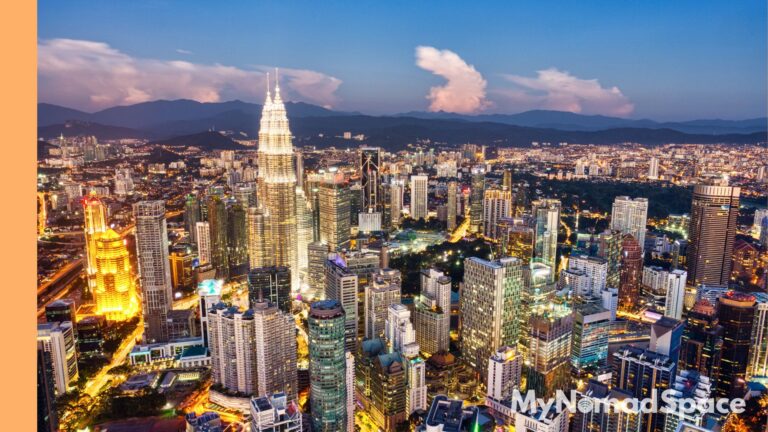
Of course, we’ll start with the capital and the place that everyone either passes through, stays for a little while or decides to set up a base in for a while. It’s fair to say that Kuala Lumpur — or KL, as it is often shortened to — has it all. There are plenty of accommodation options, work-friendly cafes, coworking spaces, great shopping malls, fantastic nightlife, safety, excellent transport links, solid internet speeds and delicious food on almost every street. It’s hard to go wrong with the city.
We think it’s all these reasons why we love KL so much. It just works every time because everything we need is right on our doorstep. Over time, we’ve come to appreciate the city more and more. We know we can simply turn up, settle in, get our work done and make the most of our downtime, no matter what time of day it is.
Is there a particular place we like to stay when we’re in the city? Yes — Bukit Bintang at the Robertson Residence. We’ve tried other areas, but much like KL, we always find ourselves coming back to these apartments because they simply deliver every time. Perfect location slap bang in the middle of everything, comfortable spaces, the Wi-Fi is always on point and we always have a “home” feeling there.
During our most recent stay in early 2026, we were in one of the rooms provided by Robertson PanoramaKL Suites. Be sure to check out the listing right here on My Nomad Space, including verified download and upload Wi-Fi speeds! Meanwhile, we’ve also compiled some of the best areas to stay in Kuala Lumpur for digital nomads.
Tioman Island
Tioman Island, located off the east coast of Peninsular Malaysia in the South China Sea, took us by surprise when we first visited, and for all the right reasons. Firstly, what a beautiful place to settle in and open the laptop. While it’s typically a destination for scuba diving, snorkelling and surfing, you wouldn’t necessarily associate it with a location for remote work. However, it certainly worked out very well for us.
When we arrived on our boat from Mersing, we were greeted with one of the most stunning island visuals we’ve probably seen since we went to the Seychelles in 2019. The dense forest, the rocky formations on the beach, the blue waters and the sunshine beaming down. You’d think we’d arrived in paradise for a holiday. Instead, we had our suitcases and work bags with us, ready to settle down and get stuck in on our laptops for a short while.
How was it for working? Incredible. The pace of life on that island was slow and carefree. The Wi-Fi was surprisingly reliable. The people were friendly. The monkeys were very noisy early in the morning during sunrise, but it was just another part of the beauty this island had to offer. There were plenty of food options too, with more international offerings found in Juara Village.
So where did we stay? Firstly, as we wanted to sample different sides of the island, we stayed at Tiongman Scubadive & Lodge in Juara Village, which provided a simple base for us right on the beach. Next, we headed to the other side of the island to Tekek Village at The Station Tioman. This accommodation provided wooden huts on the beach, which at first glance, you wouldn’t think would work for online work. Yet, there was a dedicated desk set up inside with solid Wi-Fi provided. It turned out we weren’t the only ones working from there either.
Ipoh
Ipoh was one of those places that we initially weren’t sure what to expect from. Often overlooked in favour of Malaysia’s bigger cities, it quietly surprised us with its charm and history. Located in the state of Perak, Ipoh offers something completely different from the likes of Kuala Lumpur, with its slower pace, heritage buildings, colourful street art and strong food and coffee culture.
What immediately stood out to us most when arriving from Kuala Lumpur via bus was Ipoh’s rich history. The city’s Chinese heritage is impossible to miss, from the traditional architecture and temples to the influence that Chinese communities have had on Ipoh’s development over generations. Overall, just walking around Ipoh, it felt like such a pleasant place to be. It has a character and atmosphere all of its own, offering a very different side of Malaysia.
One of the first places we found ourselves drawn to was Concubine Lane, one of Ipoh’s most famous streets. What was once a historic lane has now become a lively area filled with cafes, local shops, street food and plenty of unique finds — Raindrop Cake, anyone? Yes, we tried the viral dessert during our stay and quite enjoyed it!
Finding somewhere to base ourselves for a little while wasn’t too difficult. We decided to stay at Ninety Guest House after some research, which was around a 20-minute walk from the Old Town. We loved that some of the rooms had dedicated work desks (ours did), but there was also a cafe attached to the bottom of the accommodation, which meant coworking was possible there too. There were also numerous cafes in and around the city that were work-friendly — but we only sampled them for some cold drinks to escape the heat!
Melaka
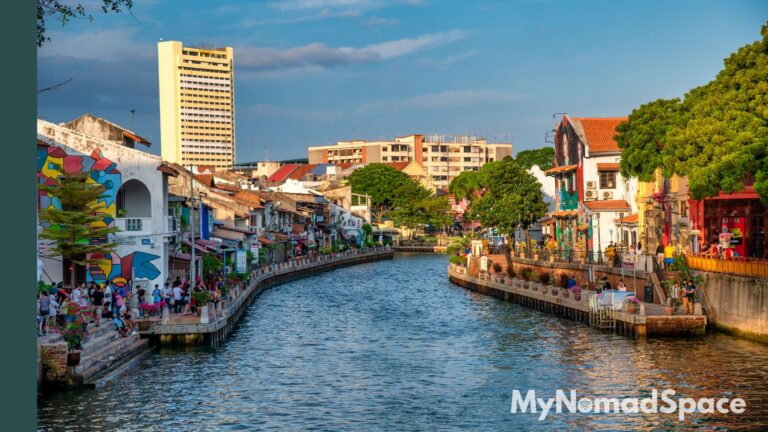
Melaka was initially a place we were supposed to do as a day trip during our visit to Kuala Lumpur back in 2022. However, Sylvie got a little sick, and we weren’t able to go. When discussions about Melaka came up again during one of our many visits to Malaysia, we thought we’d stay there a little while to truly see what this coastal Malaysian city had to offer.
Looking back, we’re glad we did. Much like Ipoh, Melaka has a completely different feel from many other destinations in Malaysia. It’s calmer, more relaxed and full of history around almost every corner. Walking around places like the Melaka River and Jonker Street, it’s easy to see why the city has become such a popular destination, with its blend of Malay, Chinese, Portuguese and Dutch influences all helping to shape the Melaka you see today.
As for working remotely, Melaka suited us far better than we expected. We stayed in a modern apartment in one of the city’s high-rise towers (Bali Sea View Residences Melaka), overlooking the sea, giving us a peaceful base to work from each day. Unfortunately, we didn’t make any notes about the Wi-Fi speeds or workspace during that visit (we wish we had, as it was a really nice place!), but we had no problems settling into a productive routine. In fact, we found Melaka to be a fantastic place for staying focused. Compared to busier destinations, there were fewer distractions, making it easy to get plenty of work done.
George Town
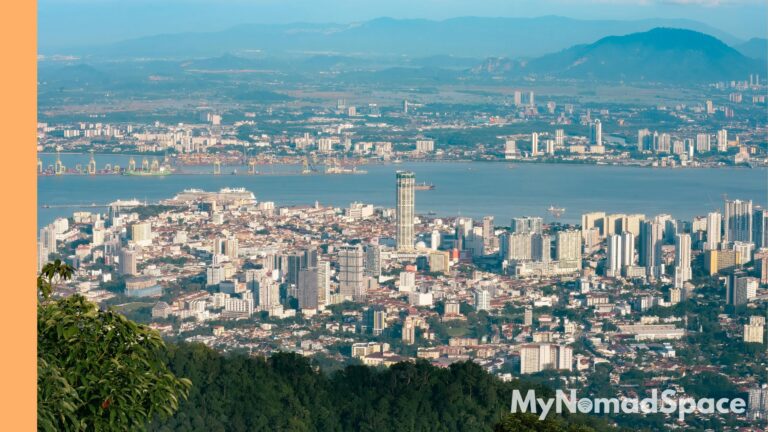
When we returned to Malaysia for the second time following our first visit, we headed straight to Penang and right to George Town. We landed in KL and headed by train the following day to Butterworth before getting a taxi over to George Town. We wanted to see what Penang was like, and it ultimately began a journey for us to sample various parts of Malaysia, seeing how they differed and how well they worked for online work. Where did George Town rank for us? It struck the perfect balance between getting work done and having plenty of time to explore and enjoy the city.
There’s plenty of accommodation suited to remote workers, along with numerous cafes that are ideal for working online and a range of coworking spaces. We ended up staying in a fairly modern one-bedroom apartment at Straits Garden Suite Jelutong (a little while before My Nomad Space was born, so we didn’t get the Wi-Fi speeds!), and it has probably ended up being one of our favourite stays. We had a very spacious living area with multiple places to work, a large shared swimming pool included and a great location for getting around.
Beyond work, George Town is rich in history, with its UNESCO-listed heritage, wonderful street art and diverse cultural influences. The city is home to vibrant quarters where you can enjoy Indian, Chinese and Malay cuisine, making it a top destination for food lovers. It’s also an excellent base for exploring the rest of Penang. We enjoyed venturing away from George Town to Batu Ferringhi for a quiet day at the beach to unwind.
Langkawi
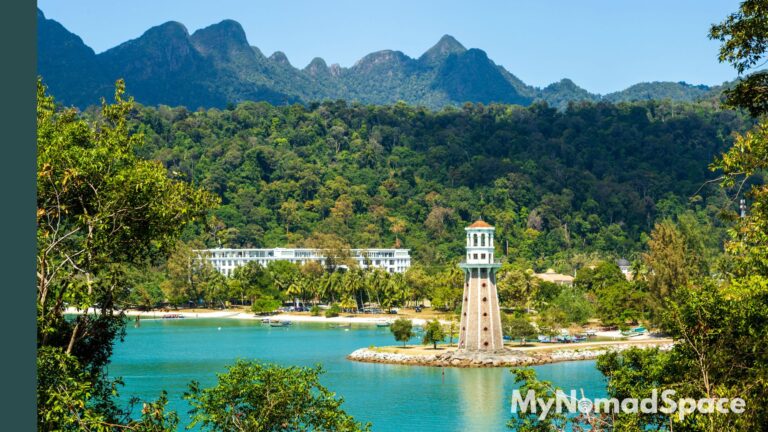
Following our stay in George Town, we headed to Langkawi. Initially, we wanted to get the ferry from George Town; however, it wasn’t operating during our time there. We couldn’t find any details online, so we headed to the pier directly to see what the situation was. When we got there, there was a sign saying that the Penang–Langkawi ferry was not in operation until further notice. Instead, we had to head up to Alor Setar and get the ferry over to the archipelago’s main island from Kuala Kedah.
Upon arriving, we were greeted with lovely blue waters and some incredible green landscapes. While Langkawi is typically a bigger tourist spot than other islands in Malaysia, we found it to be fine for settling in for a week or so and working remotely. While we found our choices a little bit limited in terms of where to stay and work, we ended up basing ourselves at Signature by The Concept (we don’t always opt for hotels unless we don’t have much choice or find great reviews — in this instance, it was a combination of both), but it didn’t let us down in terms of both comfort and Wi-Fi.
There’s certainly plenty to get up to, from exploring the impressive Sky Bridge (with one of the steepest cable car rides in the world to reach the top!), night markets, beaches, and island tours to see the other smaller islands that make up Langkawi. We wouldn’t say it was necessarily somewhere to stay long-term. Our short but sweet stay seemed like the perfect amount of time to experience it and get our work done too before moving on to another part of the country.
Semporna
We saw Semporna multiple times on social media while in Malaysia and said that we just had to go. It ultimately looked like paradise. Huts on the water. Stunning islands. The reality, however, is a little different. Flying to Tawau in Borneo and making the journey to Semporna, you arrive in the town to find poverty due to a combination of factors, while people enjoy the islands off the shore and a waterfront area that seemingly caters to tourists.
We visited the town a few times during our stay and tried to give something back to the community, but there’s only so much you can try and do. We never really had any problems there, but we felt a little out of place walking through because it’s heartbreaking to see people struggle while we have the luxury of living the way we do. It might be a little eye-opening for some who plan to visit, thinking it is all paradise in Semporna — it simply isn’t.
That said, we managed to find fantastic accommodation just on the outskirts of the town, which still gave us easy access. Chan Living provided everything we needed: solid Wi-Fi (74 Mbps download), a comfortable space to work, a swimming pool and one of the best hosts we’ve ever come across. He was incredibly caring and wanted to do everything he possibly could to make our experience with him the best it could be. Of course, we ventured out on the water to see places like Timba Timba, Bohey Dulang, and Mataking Island. They were all stunning.
We’re glad we stayed here. It was an experience that left us more aware of the challenges that many people face around the world. It also reminded us that travel isn’t always about chasing the perfect beaches, beautiful photos and highlight reels you see online. Sometimes, the most meaningful experiences come from seeing places as they truly are, understanding different realities and leaving with a deeper appreciation for the people and communities that call these places home.
Cyberjaya
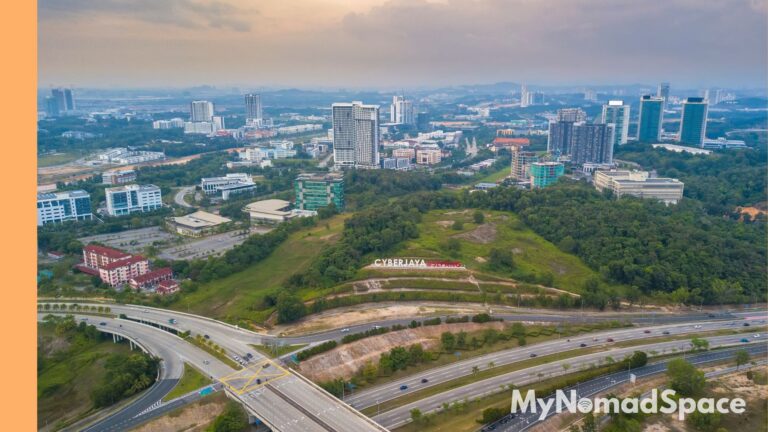
Cyberjaya sounds like one of those futuristic cities you’d expect to see in a film, with its modern buildings, planned streets and technology-focused design. It is a city found within the Greater Kuala Lumpur area. We somewhat landed here by chance. We were looking for somewhere to stay a little closer to the airport, as we were due to depart from Kuala Lumpur International Airport. Cyberjaya made more sense because it was a lot closer to the airport than the centre of Kuala Lumpur. Overall, we were extremely surprised.
It was a place that felt and looked new, from apartment blocks to shopping malls, and it was full of families and professionals who all seemed to have found themselves a home here. It’s a place that is still developing to this day, but you can see it’s attracting a lot of people who are looking for something a bit more modern and comfortable that isn’t in the centre of Kuala Lumpur. With it attracting a lot of professionals, there are plenty of cafes that are work-friendly and a handful of coworking spaces.
We were briefly based at Tamarind Suites Residence, which gave us easy access to explore Cyberjaya a little more. Overall, we felt like the city was a place we would come back to see more of once it had developed even further, because we liked the overall atmosphere and the fact that everything felt so catered towards families and professionals. We certainly can’t wait to go back and explore even more.
Putrajaya
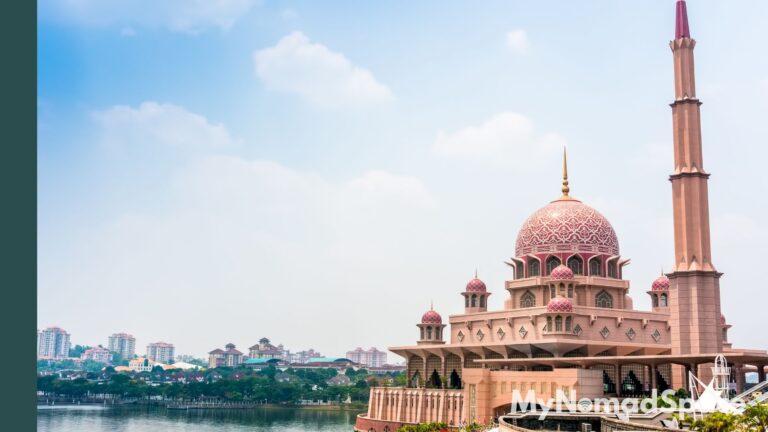
We’ve posted a lot about our Malaysia visits on YouTube, and one place our subscribers told us to go was Putrajaya. It is just next door to Cyberjaya, and we ended up staying in Putrajaya in early 2026 to see what it was like. Much like Cyberjaya, it is modern, feels new and is under regular development. There’s plenty of green space (which we love!), and it has well-developed infrastructure already. While there are more government buildings, it is certainly a great place to be based thanks to it being a lot calmer and more open than Kuala Lumpur, for instance.
We stayed at Meta Nest 4 Apartment by Kora Home in Putra Punai, which is literally on the outskirts of Putrajaya. Reflecting the modern feel of the place, it was an impressive apartment block that generally attracted a lot of young individuals. In our apartment, we had a work desk, solid Wi-Fi speeds (over 100 Mbps download and over 70 Mbps upload) and a comfortable space. We couldn’t complain about anything. We even had access to the Metro just a short walk away.
Exploring Putrajaya was fascinating, especially the area around the Putra Mosque, with the beautiful square and lake. Boat tours were also available, allowing you to get a different vantage point of the city. There was also IOI City Mall, the largest shopping mall in Malaysia and Southeast Asia. Let’s put it this way, our legs were tired after only exploring the first floor! What an enormous place. Again, we’d love to see how Putrajaya has developed further in a few years’ time.
Pangkor
A few hours from Kuala Lumpur and an hour or so from Ipoh, off the west coast, sits Pangkor Island. It’s not a traditional spot for Western tourists to visit. We saw a few things about Pangkor on social media and thought we’d give it a chance. We were pleasantly surprised by its chilled vibe, its ease of getting around and its beautiful beaches. It appeared to be a location that locals generally come to in order to get away from everyday life and enjoy a holiday from Peninsular Malaysia. We honestly think it deserves a little more attention, but I suppose it might get too busy then!
We arrived on a boat transfer from Lumut and quickly got settled at Pangkor Nature View House, which was just a short walk from the beautiful Teluk Nipah Beach. Our accommodation was simple and hidden away in a tropical oasis, with a swimming pool and surrounded by trees. The Wi-Fi was good (46 Mbps download), but it could slow down slightly during rain. On the short walk to the beach, you would regularly see monkeys. At the beach, hornbills would arrive each evening for a feed from one of the local restaurants.
One of the things we love about island living while travelling as digital nomads is the freedom to ride around on a scooter and explore hidden beaches and quiet spots that are generally less visited. We found plenty of those on Pangkor. We also took a boat ride over to the smaller Giam Island one afternoon. We went a little later to avoid the busy crowds. Apparently, the island is walkable from Teluk Nipah Beach when the tide is very low around January/February. Overall, Pangkor is well worth a look for a slower working stay.
Planning to work remotely from Malaysia? Browse our community directory of work-friendly accommodation in Malaysia, featuring verified download and upload Wi-Fi speeds. Already found a great place to stay? Help our community of digital nomads and remote workers by adding it to our directory — it’s completely free!