
Da Nang has become a popular base for digital nomads and is a place that often turns a planned short stay into a much longer one. We’ve spent time here ourselves, and it didn’t take long to understand why so many remote workers either extend their stay or keep coming back. There’s a relaxed coastal feel to this city in Vietnam, paired with a cafe and coworking scene that’s steadily grown into something genuinely suited for working online.
Life here tends to fall into a slow and comfortable pace, with beach walks in the morning, getting work done at your accommodation or cafe during the day and the occasional scooter trip to explore the coastline or nearby hills. It’s that balance between laid-back living by the beach and focusing on work that has made Da Nang increasingly appealing as a place for working remotely.
Where you choose to stay can shape the whole experience, whether it’s your first time in the city or a return visit. With that in mind, here’s a look at some of the best areas in Da Nang for digital nomads.
My Khe Beach
My Khe Beach is where most people end up basing themselves first – and it’s easy to see why. You’ve got long stretches of sand, ocean views and a steady flow of cafes and restaurants within walking distance. It’s lively without being overwhelming, and you’ll often find remote workers switching between beach time and laptop sessions throughout the day.
It’s also one of the most convenient areas in the city. Accommodation is plentiful (we ended up basing ourselves at the ELC Luxury Hotel Danang for a few weeks), food options are endless and you’re never far from a decent workspace. It’s not the quietest part of Da Nang, but if you want an easy, well-connected base by the sea, My Khe usually delivers.
An Thuong
Just inland from My Khe, the An Thuong area has become a bit of a hub for expats and digital nomads. It has a compact, walkable feel with plenty of cafes, coworking spaces and international food options all clustered together.
It’s a great middle ground. It’s close enough to the beach to enjoy it daily, but with a slightly more local, lived-in atmosphere than the beachfront strip. Many people end up staying longer here than planned simply because everything they need is within a few streets. We enjoyed walking over from our base to explore some of the local food spots in the area.
Hai Chau
Hai Chau is Da Nang’s city centre and feels a bit more downtown compared to the beach areas. This is where you’ll find shopping streets, local eateries and a more traditional Vietnamese city vibe.
It’s not as digital nomad focused as the coast, but it works well for people who prefer being in the middle of everything. Cafes are still easy to find, and you’ll often get better value places to stay. It’s a solid option if you want a more local, everyday experience of Da Nang while still being able to work comfortably. We ventured over to this part of Da Nang a few times to get a more local experience.
Son Tra Peninsula
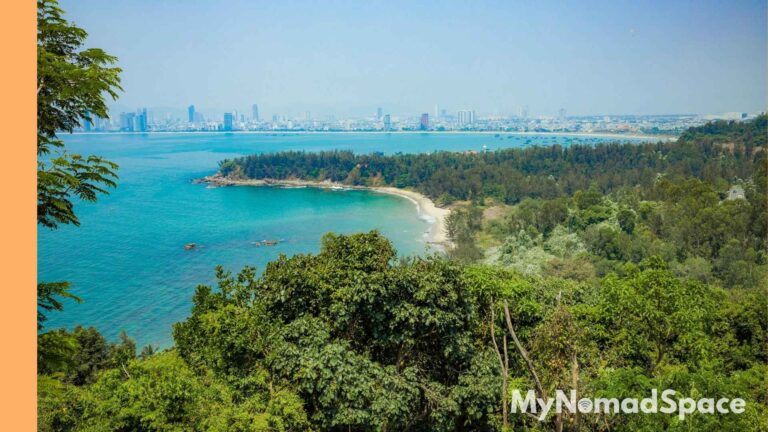
Son Tra feels like a completely different side of the city. It’s greener, quieter and much more spread out, with jungle-covered hills dropping down towards the coast. Accommodation here tends to be more villa-style, and many people come here for privacy and great views.
You won’t find the same cafe or coworking spot density as the central area or beach areas, but that’s part of the appeal. It’s more about slowing down and breaking the work day up with nature, motorbike rides or time by the sea. For remote workers who value peace and fewer distractions, it’s one of the easiest places in Da Nang to settle into a working routine.
Thanh Khe
Thanh Khe sits to the northwest of Da Nang’s city centre and feels noticeably more local than the beachside areas. This is a largely residential area, with everyday life rather than tourism shaping the pace of things.
You won’t find many working spots here, but what you do get is a quieter environment and much lower accommodation costs. It’s also still within easy reach of both the main city centre and the beach by Grab, making it a practical option for longer stays on a budget. If affordability is a priority, this is one of the better areas to find longer-term rentals without sacrificing access to the rest of the city.
Hoa Khanh
Further out towards the northwest, Hoa Khanh is close to Da Nang’s university zone and has a more student-led, working-city feel. It’s functional and very much geared towards local life rather than foreign visitors.
Out and about, cafes are more basic and less tailored to remote workers, and you won’t find the same digital nomad infrastructure as in My Khe or An Thuong, for instance. However, for those prioritising cost over convenience or atmosphere, it can work well for longer-term stays.
Non Nuoc
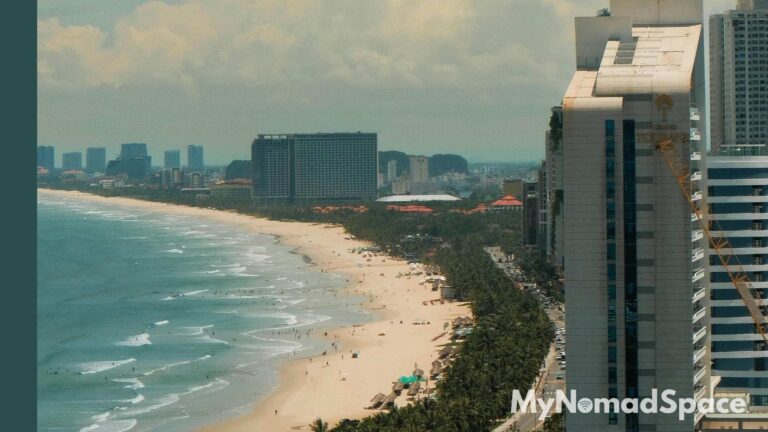
Down towards the southern edge of the coastline, the Non Nuoc area is known for its resorts, quieter beaches and proximity to the famous Marble Mountains. Compared to central Da Nang, this area is far more spread out and relaxed. It’s better suited to those who want space and nature rather than cafe-hopping or coworking. Getting around usually requires a scooter or car.
It’s a good option if you want to step away from the busier parts of the city while still staying close enough to visit when needed. For digital nomads who prefer working from a peaceful base with easy access to the beach, Non Nuoc can be a great fit.
So, where do you fancy staying in Da Nang?
The best area ultimately depends on the kind of remote working lifestyle you’re looking for. If being close to the beach, cafes and other digital nomads is a priority, My Khe and An Thuong are usually the first places to consider. If you prefer a more local experience, Hai Chau offers a good balance of convenience and value, while Son Tra and Non Nuoc are better suited to those looking for space and a slower pace.
One of the advantages of Da Nang is the variety of places of stay. As we noted at the start of this write-up, many remote workers arrive planning to stay for a few weeks and end up extending once they find an area and accommodation setup that suits their routine.
Planning to work remotely from Da Nang? Browse our community directory of work-friendly accommodation in Da Nang, featuring verified download and upload Wi-Fi speeds. Already found a great place to stay? Help our community of digital nomads and remote workers by adding it to our directory — it’s completely free!


This article was updated on July 23rd, 2026.