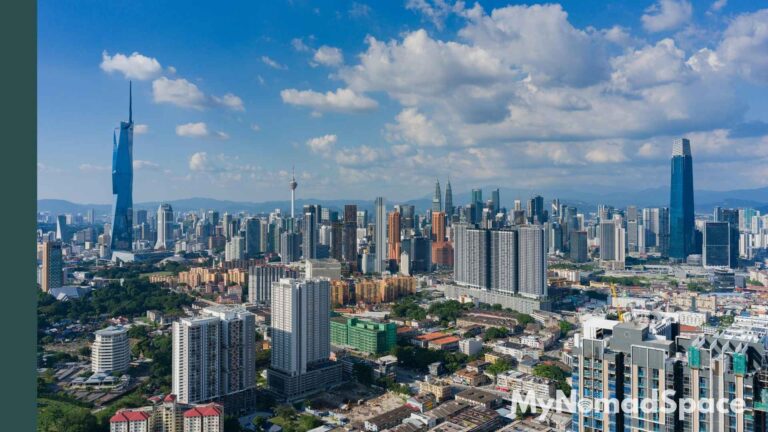

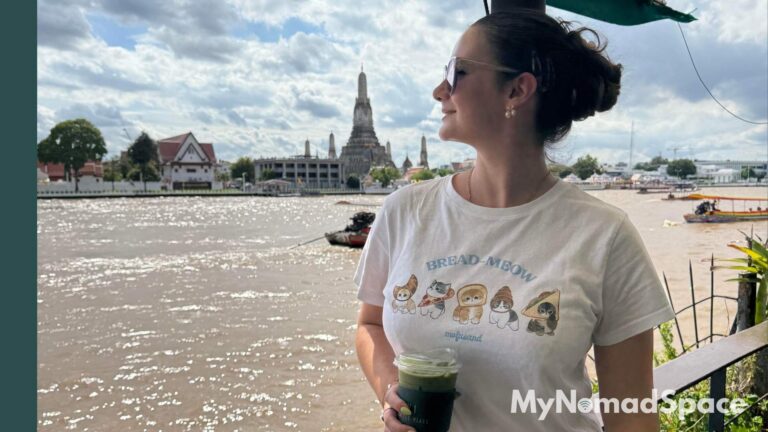
Bangkok, the capital city of Thailand, is a hugely popular destination for digital nomads. It is the home of the iconic Grand Palace and legendary street food, and perhaps your next remote work base.
Many location-independent professionals are drawn to this corner of Southeast Asia thanks to its solid infrastructure, unique culture, affordability compared to back home and overall safety. Not only that, but it’s easy to get around, the food is out of this world and there is always something going on, no matter what time of day you step out of your accommodation after packing away your work devices.
We absolutely love Bangkok and find ourselves coming back here time and time again. There’s a real uniqueness to the place, a vibe you just don’t get in many other cities, especially in this part of the world. Every visit feels familiar yet somehow brand new, which is a big part of its charm. Oh, and getting to visit places like 7-Eleven again, of course!
That being said, let’s dive into all the topics that need covering when it comes to digital nomad life in Bangkok. From accommodation, average Wi-Fi speeds and visas to shopping, transportation and coworking, we’ll cover it all in this guide.
In this Bangkok for Digital Nomads guide
Accommodation in Bangkok
Apartments
If you’re planning an extended stay in Bangkok, renting an apartment is often the most convenient option. Apartments range from compact studios to modern one-bedroom units in high-rise buildings. Many come fully furnished, with utilities and internet included, which makes settling in a lot quicker and easier.
Rates can vary depending on the type of apartment and location. For example, we recently rented Nothing to Worry @ Notting Hill Jatujak by Balloon from Airbnb for one month, which came to around £700 with all bills included. It was in a fairly new listing and came with extra perks like a swimming pool and gym. It was also within walking distance of things like Chatuchak Weekend Market, BTS Saphan Khwai and MRT Chatuchak Park.
When it comes to price, you can generally expect budget studios to cost between £200 and £400 per month. Modern one-bedroom apartments in central areas typically range from £400 to £800 per month. High-end condos can cost £800 or more per month, sometimes reaching £1,500 and above. Be aware that not all apartments come with the bills included, so there may be additional fees to pay.
Most apartments offer facilities like gyms, swimming pools and 24/7 security, which can make life as a digital nomad more comfortable. Another bonus is that many properties are close to public transport, so getting around the city is easier than you might think.
You can find apartments in Bangkok through a variety of channels. Airbnb is a popular choice, often offering fully furnished units with bills included. Local property websites like Hipflat, DDProperty, RentHub and BaanFinder are excellent resources. Additionally, dedicated Facebook groups are useful for finding sublets, local deals and sometimes more flexible arrangements directly from landlords. For apartments with verified Wi-Fi and trusted reviews, My Nomad Space makes it easy to find the right fit.
Hotels
Looking for something more short-term or want the convenience of services? Bangkok has an abundance of hotels to choose from. From hidden gems tucked away in quiet alleyways to large international chains with every service you could imagine, there’s definitely something for every budget.
Hotels are ideal if you’re only staying a few days or weeks, or if you want a hassle-free experience without worrying about bills and cleaning. Many hotels also offer long-stay rates, which can make them a surprisingly viable option for digital nomads who prefer a more serviced environment.
We’ve stayed in various hotels in Bangkok, the most recent being Vib Best Western Sanam Pao, which ideally featured a work desk, mini coworking area and a gym. Also, BTS Sanam Pao was just outside! It was an ideal base for a few days after landing from Europe.
In terms of pricing, budget hotels and guesthouses can start from around £15–£25 per night, mid-range options typically range from £30–£70 per night and high-end or luxury hotels can easily cost £100+ per night. Many hotels cater to remote workers by including key amenities like a dedicated work desk, solid Wi-Fi and sometimes access to a gym or pool.
You can find hotels through booking platforms like Booking.com and Agoda. For more local options, searching on Google Maps or using Facebook travel groups can also help you discover under-the-radar properties. Visiting hotels in person while you’re in the city can help you decide if they suit your requirements. If you’re seeking hotel stays with verified Wi-Fi and work-friendly amenities, check out our listings.


Serviced apartments
For individuals who want the comfort of an apartment along with some of the conveniences of a hotel (what a great combo!), serviced apartments are a great option. These are fully furnished units with utilities included, and many offer additional services like housekeeping, gyms, swimming pools and sometimes even concierge support.
Serviced apartments are ideal for digital nomads planning stays of a few weeks to several months who want the freedom of their own space without giving up a few helpful conveniences.
For serviced apartments in Bangkok, you can generally expect rates to start around £500–£700 per month for a studio or one-bedroom unit, with larger or premium units reaching £1,000–£1,500+ per month, depending on location and what’s included.
You can find serviced apartments through major booking platforms, local property websites or directly through the providers. For listings verified for work-friendly amenities and reliable Wi-Fi, My Nomad Space also features curated options.
Hostels
If you’re a budget-conscious digital nomad who loves meeting people and doesn’t mind things being a bit simpler, hostels are an excellent option. Some of Bangkok’s hostels aren’t your average backpacker spots. They can range from lively social hubs to more peaceful spaces.
Many hostels now cater to remote workers, offering coworking areas, fast Wi-Fi and communal kitchens or lounges where you can work comfortably. Staying in a hostel is a perfect way to make new friends and tap into the local community without breaking the bank.
The cost of hostels in Bangkok? dorm beds typically start from around £5–£15 per night, while private rooms usually range from £15–£30 per night, depending on location and services. Some hostels even offer weekly or monthly rates, which can be a very affordable option for digital nomads on a budget.
You can find hostels on platforms like Hostelworld, or through Facebook travel groups, searching on Google Maps and via local listings when you’re on the ground for more off-the-beaten-path options. Remote workers can also explore Bangkok hostels on My Nomad Space.
Coliving
Coliving spaces have started to gain popularity in Bangkok, and they’re ideal if you want a mix of community and work-friendly setups. These spaces typically offer private rooms or apartments along with shared coworking areas, super-fast Wi-Fi, shared kitchens and social events designed to bring residents together.
Coliving is perfect for digital nomads who value networking and a ready-made community of like-minded people. Some popular options also include wellness programs and fitness facilities.
In terms of pricing, you can generally expect private rooms to start around £300–£500 per month, with larger apartments or premium options ranging from £600–£1,200+ per month, depending on the area and amenities.
Spaces for coliving can be found on websites like Coliving.com, or directly through the coliving space itself, making it easy to compare options, check availability and choose a setup that fits your lifestyle and budget. Bangkok coliving listings can also be found right here on our platform.
Read more:
Bangkok Wi-Fi speeds and internet reliability
Average Wi-Fi speeds in Bangkok
As of February 2026 when we published this piece, the average Wi-Fi speeds in Bangkok were 97 Mbps download and 65 Mbps upload, according to TestMy, which gathers internet data from countries and cities all around the world. As you can see, speeds are great for Bangkok and, most importantly, excellent for getting work done. That being said, you can find even faster speeds in new condos, for example, which typically have fibre optic connections.
Download and upload speeds are only increasing too, as this time last year, the average download speed was 79 Mbps and the average upload speed was 49 Mbps. Of course, with further technological advancements and developments in the city, the average internet speeds will probably breakthrough 100 Mbps in the next few years.
Mobile internet (4G/5G) performance
One thing you’ll notice in Bangkok, and Thailand in general, is that everyone uses their mobile phone A LOT. Well, when you’ve got excellent data packages and exceptional 4G and 5G connections, it would be rude not to take full advantage.
TrueMove, AIS and DTAC are the main providers in Bangkok, which offer 5G coverage, particularly in central areas of the city. We always make sure to get data on our phones for when we’re out and about, or even as a backup when working. We usually pick ours up from Center One Shopping Plaza, which is a lot more economical than securing one at the airport, for instance. Shop around and you’ll find some good deals.
Overall Wi-Fi reliability in Bangkok
As we wrote in our Internet in Bangkok: How Fast and Reliable is the Wi-Fi? article, the Wi-Fi and general internet quality in Bangkok is great. You won’t have trouble finding somewhere to stay with great Wi-Fi (we can help with that)!, or if you enjoy coworking or opening your laptop in a local cafe, you’ll usually find top speeds in those places too.
When it comes to overall reliability, and given Bangkok has solid infrastructure, internet outages are very, very rare. We have yet to experience any instances of the Wi-Fi or power flaking out. Of course, that’s not saying it doesn’t happen, but things like weather and engineering work (we still don’t know how they manage to work with all those wires high above in the street!) can impact service.
Bangkok weather and the best time to visit
Seasons in Bangkok
Bangkok’s dry, cooler season is from November to February, which, as you can imagine, most locals and travellers find the most comfortable. The rainy season runs from mid‑May to October, with March and April bringing the hottest stretch of the year.
Average temperature and rainfall
The dry, cooler season from November to February can see temperatures dip from around 30°C in the summer months to roughly 28°C. The difference isn’t dramatic, but what really transforms the experience is the drop in humidity levels, which makes the heat feel far more comfortable.
Regarding rainy season, September typically brings the heaviest downpours, with August and October also seeing plenty of wet days. These three months form the peak of the monsoon cycle, creating the most noticeably rainy portion of the year.
Best months to visit
When is the right time to visit Bangkok? Well, the answer is simple: whenever feels best for you. If you don’t mind the occasional downpour during what’s considered the low season, then go for it. We’ve stayed in Bangkok several times during the so‑called “rainy season,” and we’ve still managed to do everything we would normally do in the dry months. It’s never affected us that much. If does decide to lash it down, you’ll find that it will clear within an hour or so.
Nevertheless, the most popular time for people to visit Bangkok is during the dry, cooler season between November and February. It is understandable, as it’s a more manageable period to explore the city and you’re almost always met with clear skies. The only downside is that you’ll find things like accommodation to be more expensive during these months, whereas the low season prices are a lot less.
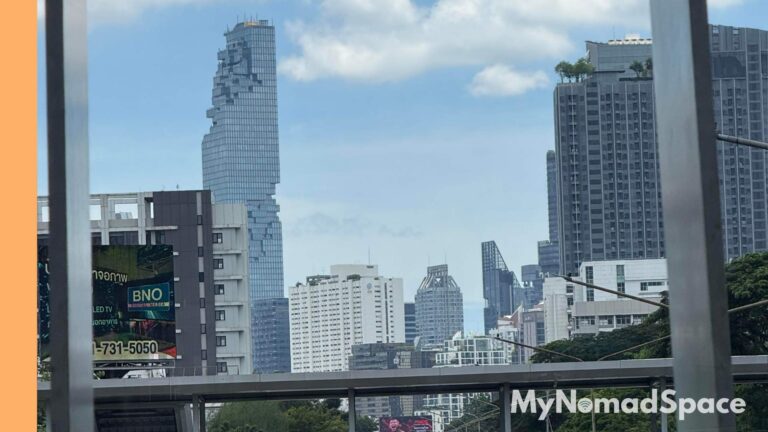
Public transport and getting around in Bangkok
BTS
First opening in 1999, Bangkok’s BTS Skytrain (officially called the Bangkok Mass Transit System) has become one of the easiest ways to move around the city. It is our most favourite way to get around Bangkok.
It runs on two main lines. The Sukhumvit Line, stretching from Khu Khot down to Kheha, and the Silom Line, which goes from National Stadium to Bang Wa. Along the way, it stops at popular spots like Siam, Asok, Phrom Phong, Sala Daeng and Saphan Taksin, which makes it incredibly simple to hop between different areas of the city. It is extremely convenient and always spotlessly clean, with the air conditioning making every ride refreshing after being outside in the heat.
There’s also the Gold Line, a short feeder line that links directly to the huge Icon Siam, giving you an easy connection to one of Bangkok’s biggest malls. Yes, trust us, it’s huge.
MRT
Bangkok’s MRT (Metropolitan Rapid Transit) has become another reliable way to get around the city, especially for reaching areas not covered by the BTS. It is a convenient option for both locals and visitors.
The MRT, which began services in 2004, mainly operates on two lines. The Blue Line, which runs from Tao Poon to Lak Song, looping through the city and connecting key districts, and the Purple Line, stretching from Khlong Bang Phai to Tao Poon. Along the route, it stops at key locations such as Sukhumvit, Silom, Chatuchak Park, Hua Lamphong and Thailand Cultural Centre.
Airport rail link
The Airport Rail Link is one of the fastest and most convenient ways to travel between Suvarnabhumi Airport and central Bangkok. It’s an ideal option for travellers looking for a simple connection straight from the airport into the city. We use it every time we arrive into Bangkok.
The line runs from Suvarnabhumi Airport (located on the bottom floor) to Phaya Thai, with key stops including Makkasan and Ratchaprarop along the way. At Makkasan, passengers can easily connect to the MRT, while Phaya Thai links directly to the BTS Skytrain, making onward travel around Bangkok straightforward. Given we like to book our accommodation close to the BTS, we always get off at Phaya Thai and figure out our next move out from there.
SRT
For some shorter journeys within Bangkok, the SRT (State Railway of Thailand) is especially useful, particularly when travelling to and from Don Mueang Airport. The SRT Red Line is divided into two services, the Dark Red Line and the Light Red Line.
The Dark Red Line runs from Bang Sue Grand Station to Rangsit, with a direct stop at Don Mueang Airport, which makes it one of the easiest ways to reach the airport without dealing with road traffic. The Light Red Line connects Bang Sue Grand Station to Taling Chan, serving western districts of the city.
Ride-hailing apps
Ride-hailing apps are another popular way to get around Bangkok, especially if you prefer the ease door-to-door travel. Services such as Grab are widely used across the city, offering an easy alternative to traditional taxis with upfront pricing and cashless payment options.
These apps allow you to request a car or motorbike directly from your phone. You can choose from different vehicle types depending on your budget and group size, and track your journey in real time for added peace of mind.
While travel times can vary depending on traffic, ride-hailing apps provide flexibility and convenience, particularly when you want a more personalised and sometimes quicker way to get around Bangkok.
Tuk tuk
Tuk tuks are one of Bangkok’s most iconic forms of transport and can be a fun way to experience the city, especially for short journeys. Their open-air design provides a unique view of the streets and a lively ride that many visitors enjoy, particularly in the evenings.
However, it’s important to be aware that tuk tuks can sometimes be associated with scams, especially in tourist-heavy areas. Drivers may quote inflated prices, suggest unnecessary stops at shops or attractions or offer “special deals” that are too good to be true. Always agree on the fare before starting your journey and be cautious of unsolicited recommendations.
We’ll be honest, this happened to us during our very first visit to Bangkok. We weren’t really aware of the scams that took place, so when someone offered to take us to some key landmarks because the Grand Palace was supposedly closed that day, it seemed like a good idea. The driver was very friendly and convincing. However, when we pulled up at a second tailor shop, we knew this wasn’t normal, and definitely wasn’t what we’d signed up for. Of course, we didn’t buy anything. And thankfully, we didn’t pay over the odds for the tuk tuk ride. We just took it all as a lesson learned.
We’ve rode in many tuk tuks since then. Following the first night of Vijit Chao Phraya 2025 (you can watch our video of the amazing drone show here), we used a tuk tuk to reach the BTS stop we needed to get back to our apartment, and the driver was extremely pleasant.
Bus
Bangkok’s bus network is vast and covers almost every corner of the city. While buses might not be the first choice for many visitors, they can be very useful once you get a basic understanding of how they work.
There are several types of buses operating in Bangkok, ranging from older, non‑air‑conditioned buses to modern, air‑conditioned services. In recent years, newer electric buses – especially those operated by Thai Smile Bus – have joined the network, offering quieter, more eco‑friendly transport around the city and nearby provinces. These electric buses are easy to spot by their distinctive blue livery, and run on set routes much like traditional buses.
Payment on buses now varies depending on the operator. The classic city buses still mostly use cash paid to a conductor on board, so having a small amount of money ready is helpful. On Thai Smile Bus electric routes, you can also pay with contactless options like a QR code.
Buses are particularly handy for areas not easily reached by the BTS or MRT, and they can be a good option for short journeys where traffic isn’t too heavy. That said, travel times can be unpredictable due to Bangkok’s congestion, especially during rush hours. Routes and stops can also be confusing if you’re unfamiliar with the city, as signage is often in Thai and announcements aren’t always clear. Using a navigation app like Google Maps can help you pinpoint your location and plan your journey.
Boats and ferries
The waterways of Bangkok are a practical way to get around the city. The Chao Phraya River Express Boats run up and down the river with different colour-coded services – Orange, Yellow, Green-Yellow and Red Flag boats – stopping at piers near major attractions and transport hubs. They completely avoid traffic and give you a fantastic view of the city’s skyline, temples and riverside life.
For visitors, there are also hop-on, hop-off tourist boats that cover key piers and landmarks along the river. While slightly more expensive than the express boats, they make it simple to see attractions like Asiatique, Tha Chang and Sathon without having to worry about transfers or figuring out the right pier.
Bangkok’s canal boats, also known as khlong boats, are another way to get around. The most popular is the Khlong Saen Saep service, which runs across the city with frequent departures all day. Fares are low, tickets are bought on board and it’s often faster than taking a taxi when traffic is heavy. We’ve taken these boats several times and love how easy it is to get from one place to another on the water. However, they can get busy and feel a little overcrowded during peak hours.
Additionally, there are electric canal boats and smaller water services along some of the city’s canals. These quieter, greener boats mainly serve locals but can be a fun, budget-friendly way for visitors to explore parts of the city that aren’t easily reached by road or rail.
Where to eat and drink in Bangkok
Local food
Bangkok is packed with no-frills Thai restaurants where the food is the main attraction. These are small, often tucked-away places where locals eat every day. Pad see ew and massaman curry (two of our absolute favourites) are just a few classics you’ll find on menus across the city. Most meals are served family-style, with rice and a few dishes shared among friends or colleagues.
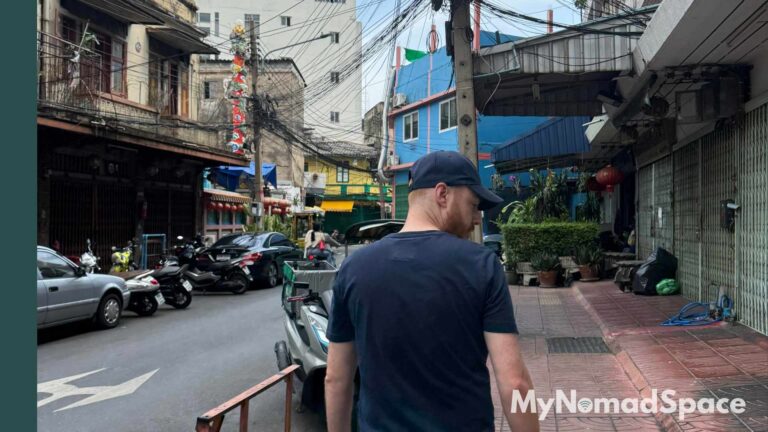
We definitely recommend Chinatown. Here, tiny restaurants and eateries line the streets, offering everything from noodle soups and seafood to dumplings and traditional desserts. It’s a place where locals go for quick meals, late-night dinners or to sample unusual Thai-Chinese dishes that you won’t find elsewhere.
Markets are another hotspot for local Thai food. Chatuchak Weekend Market and smaller markets are great for grabbing a quick meal or tasting a variety of dishes in one go. From fresh curries, salads, grilled meats, tropical fruits and sweets, it’s the kind of everyday food that locals rely on and love.
Even Bangkok’s shopping mall food courts are worth checking out. Malls like Terminal 21, MBK, Siam Paragon and EmQuartier have great food courts where locals and office workers grab lunch or dinner. The variety is huge – from classic stir-fries and curries to noodle dishes, soups and desserts – all at great prices. While they’re more polished than markets or small eateries, the food is still authentic, fast and reliably tasty.
Street food
Bangkok’s street food scene is legendary, with vendors on nearly every corner selling quick and delicious bites. You’ll find everything from grilled meats on skewers, fried snacks and noodle dishes to tropical fruits, fresh juices and desserts. Areas like Victory Monument, Silom and Chinatown are especially busy with vendors, but practically any district has its own hidden gems.
Popular street dishes include pad Thai, moo ping (grilled pork skewers), kanom bueang (Thai crispy pancakes) and sticky rice with mango. These dishes are usually cooked in small batches right in front of you, giving you a taste that’s fresh, hot and packed with flavour. Many vendors have been running their stalls for decades, and locals often return daily for their favourite bites.
Street food is also fast and convenient, perfect for a quick lunch, an afternoon snack or late-night eats after exploring the city. Most stalls only accept cash, and it’s common to eat standing up or take your food away to enjoy nearby. Observing which stalls have the longest lines is a simple way to find the tastiest options. If locals are queuing, you know it’s good!
In addition to the famous streets, night markets bring together dozens of street vendors in one place. These markets provide a mix of traditional Thai dishes and snacks, giving you a chance to sample multiple items in a single visit while soaking up the lively atmosphere.
Fast food
The city has a huge variety of fast food options, from familiar international chains to local favourites. You’ll find McDonald’s, KFC and Burger King in almost every shopping mall and along busy streets.
Local fast food chains are also incredibly popular and often offer Thai-style twists on familiar concepts. Places like Chester’s, Texas Chicken and Yayoi serve fried chicken, noodles, rice dishes and Japanese-inspired meals at decent prices. Convenience stores like 7-Eleven and Family Mart also sell ready-to-eat meals, sandwiches, toasties and snacks.
Many malls and transit hubs have food courts with fast options, where you can mix local and international dishes in one place. These are especially convenient for office workers, shoppers and travellers who want something quick and reliable without compromising on taste.
Vegetarian and vegan food
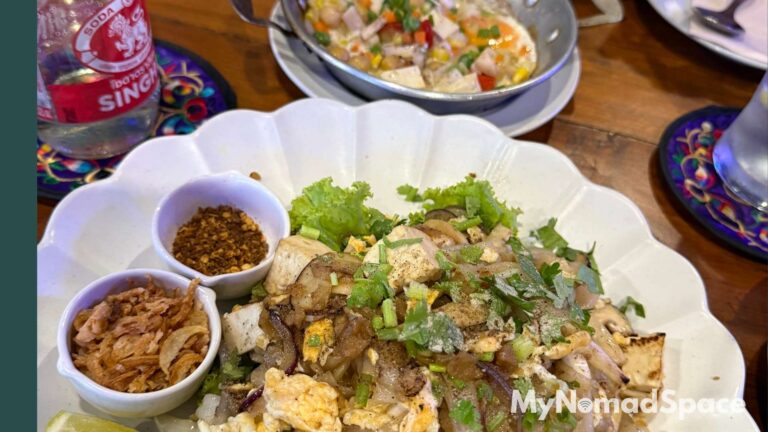
Bangkok has a growing number of vegetarian and vegan-friendly options, from dedicated restaurants to market stalls and casual eateries. Traditional Thai dishes without meat or international plant‑based meals, it’s easy to find something delicious. We’re both vegetarian, so we absolutely love discovering great veggie places in the city!
Dedicated spots like Vegetarian Society in Chatuchak (one of our most visited spots!) and VEGANERIE Concept offer creative dishes. You can find everything from curries and fried rice to noodle dishes and sweet treats.
For a more local experience, markets and food courts often have vegetarian options clearly marked. Dishes like vegetarian pad Thai, green curry with tofu, stir-fried vegetables and fresh spring rolls are widely available. Street food markets in areas like Chatuchak and Chinatown sometimes have vegan-friendly versions of traditional snacks, though it helps to ask vendors if any fish sauce or shrimp paste is used.
Seafood
There is fresh seafood everywhere in Bangkok. You’ll find small local restaurants to casual dining spots and even some street-side grills. For classic Thai seafood dishes like pla kapong (fried sea bass), stir-fried crab with curry powder, tom yum seafood and grilled prawns, head to areas like Bang Rak, where riverside restaurants serve daily catches in a relaxed, local atmosphere.
If you’re near the river, areas like Phra Pradaeng and Khlong San have family-run seafood eateries tucked along canals. Here, you can enjoy steamed fish with lime and chili, spicy seafood salads and fresh shellfish without the tourist crowds. These places are simple in appearance but focus on quality and flavour.
For something more modern, especially within shopping or nightlife districts, malls like EmQuartier and Icon Siam offer seafood options at their food courts, along with casual restaurants serving dishes like stir‑fried squid with salted egg, shrimp fried rice and seafood hot pots.
Desserts and sweet treats
The city has an endless array of desserts, from tiny hidden stalls to stylish cafes. Traditional Thai sweets like mango sticky rice, khanom chan (layered jelly), luk chup (fruit-shaped mung bean sweets) and thong yod (golden egg yolk drops) can be found in shops all over the city.
For something modern or “Instagram-worthy”, cafes in areas like Thong Lor, Ekkamai and Ari serve creative twists on classic treats. Expect shaved ice with tropical toppings, Thai-style crepes, pandan cakes and fusion desserts that mix Thai flavours with Western favourites. These spots are often buzzing with locals looking for a mid-afternoon sugar hit.
Even local bakeries tucked into side streets offer surprises. In places like On Nut and Victory Monument, small shops sell crispy coconut pancakes, fried bananas, pandan chiffon cakes and sticky rice desserts that feel homemade but are packed with flavour. These are perfect for a quick takeaway snack. As we’ve already noted, Bangkok is brimming with delicious desserts, and writing this section has left us seriously hungry for something sweet!
Fine dining and rooftops
Bangkok isn’t just about street food and casual eateries. The Thai capital also boasts an impressive fine dining scene. From award-winning Thai restaurants to international cuisine, there’s something for every palate. Spots like Sorn, Paste and Le Du offer elevated Thai dishes with intricate flavours and elegant presentation, perfect for a special night out.
Rooftop bars and restaurants are another iconic part of the city’s dining scene. Vertigo and Moon Bar at Banyan Tree and Sky Bar at Lebua provide stunning panoramic views of the Bangkok skyline along with creative cocktails and high-end dishes. Dining here is as much about the atmosphere and the views as the food itself.
Upscale international options are plentiful too. Italian, Japanese, French and modern fusion restaurants can be found in Sukhumvit, Sathorn and Silom, often tucked inside luxury hotels or sleek standalone venues. Many combine exceptional service and tasting menus that make for memorable meals.
International food
The city has a wide range of international options to suit every craving. From Italian pasta and wood-fired pizzas to Japanese ramen, sushi and Korean BBQ, you can find dishes from around the world in areas like Sukhumvit, Thong Lor and Ari, where many expats live and eat.
Casual global chains are everywhere, but local adaptations often add a unique twist. For example, Japanese restaurants may serve ramen with Thai-style spicy broth, Italian spots might offer seafood pasta with local ingredients and Western-style brunch cafes often incorporate tropical fruits and Thai flavours into their menu.
Shopping malls are also hubs for international cuisine. At CentralWorld, EmQuartier and Terminal 21, for instance, the food courts and casual restaurants offer everything from burgers and tacos to pizza, noodles and more, all in one place.
Food etiquette in Thailand
Eating in Bangkok is as much about enjoying the food as it is about respecting local customs. As we mentioned earlier, Thai people often eat family-style, sharing several dishes with rice, so it’s normal to have multiple plates in front of you rather than one individual meal.
When eating, it’s customary to use a fork and spoon. The fork is mainly used to push food onto the spoon, which then goes into your mouth. The fork rarely goes directly into your mouth. Chopsticks are generally reserved for noodle dishes.
It’s polite to wait for the eldest person to start eating at a formal meal, though this is less strict in casual restaurants and markets. Also, finishing everything on your plate is a sign that you enjoyed the meal, though leaving a small portion is acceptable in some situations.
In street‑food or casual settings, it’s normal to eat quickly and move on, especially during busy lunch hours. However, in sit-down restaurants, meals can be more leisurely and it’s polite to avoid being loud.
Money and cost of living in Bangkok
Currency and exchange rates
Thailand’s currency is the baht (THB). Most places in Bangkok accept cash, though credit and debit cards are widely used in malls and restaurants. ATMs are everywhere, and currency exchange booths often provide better rates than banks.
Exchange rates can fluctuate, so it’s worth checking the current rate before exchanging large sums. As an example, on January 15, 2026, the exchange rate was roughly 31.43 THB to 1 USD, about 36.63 THB to 1 EUR and around 42.25 THB to 1 GBP. Small notes are handy for street food and markets, while larger notes work fine in restaurants and shops.
ATMs and banking
ATMs are widely available throughout Bangkok, from airports and malls to convenience stores and BTS stations. Most machines accept international cards, but be aware that many ATMs charge a fixed fee per withdrawal – often up to 300 THB (around £7) – in addition to any fees your bank may charge. It’s a good idea to check with your bank and plan withdrawals accordingly.
Banks are common in central areas and usually operate from 9:30 am to 3:30 pm on weekdays. Many banks offer currency exchange, though official currency exchange booths – like SuperRich or those in shopping malls – often give slightly better rates than ATMs for larger amounts. When using ATMs, opt for machines attached to banks rather than standalone street machines to reduce the risk of skimming.
Meanwhile, foreigners can open a Thai bank account, but you typically need a passport, valid visa and proof of address, with some banks also asking for a work permit or residence certificate. Accounts can be used for local transfers, salary deposits and ATM withdrawals, which is handy for longer stays.
Typical prices for food and drink
Bangkok is generally affordable – especially for Westerners – when it comes to food and drink, but prices vary depending on where and what you choose. A meal at a budget restaurant or local place often costs around ฿90–฿200 (£2.85–£6.35), while a mid‑range sit‑down meal can be ฿200–฿400 (£6.35–£12.75) per person without drinks. A three‑course dinner for two at a nicer restaurant typically runs ฿600–฿1,000+ (£19–£32+).
For fast food, like a McDonald’s or similar combo meal, expect around ฿175–฿300 (£5.55–£9.55). Drinks are affordable compared to many Western cities, with soft drinks (฿15–฿40 / £0.50–£1.25) and bottled water (฿8–฿20 / £0.25–£0.65).
If you’re after a caffeine fix, a cappuccino or coffee usually costs about ฿70–฿150 (£2.25–£4.75) depending on the coffee shop. For beers, a local draft or bottle is typically around ฿70–฿120 (£2.25–£3.80) in bars or restaurants, with imported beers a bit higher (฿150–฿250 / £4.75–£8).
At markets and street vendors, snacks and drinks are even more reasonable. Fruit smoothies might be ฿40–฿70 (£1.25–£2.25), iced tea or Thai coffee ฿30–฿50 (£0.95–£1.60), and fresh coconuts ฿30–฿50 (£0.95–£1.60). These make for inexpensive on-the-go bites throughout the day. If you want more information on Bangkok’s cost of living, including typical food and drink prices, Numbeo has a helpful guide you can view here.
Transportation costs
As previously mentioned, Bangkok offers a wide range of transport options to suit different travel needs and lifestyles. For regular trips around the city, public transport like the BTS Skytrain, MRT subway and commuter trains (SRT) are commonly used. Single rides typically cost ฿16–฿59 (£0.50–£1.90), with monthly commuting expenses usually ranging from ฿1,500–฿3,000 (£48–£95).
Buses provide coverage across most areas, with fares generally between ฿8–฿25 (£0.25–£0.80) per trip. They are often used alongside other transport modes to reach areas not served by trains.
Taxis and ride-hailing services such as Grab cover short to medium distances, with fares typically ฿80–฿200 (£2.55–£6.35). Frequent users can expect to spend around ฿4,000–฿6,000 (£125–£190) per month. When it comes to tuk tuks, fares range from ฿20–฿80 (£0.65–£2.55) depending on distance and negotiation, but ensure you agree a final price before getting inside.
River boats and ferries along the Chao Phraya River, as well as the Khlong Saen Saep boat service, provide practical water-based options for getting around the city. Fares are usually between ฿5–฿30 (£0.15–£0.95) per trip, with regular commuters along riverside or canal routes typically spending around ฿500–฿900 (£16–£28) per month.
Tipping
Tipping in Thailand is not mandatory, but it is appreciated for good service. In restaurants, leaving around 5–10% of the bill is common if service charges are not included. For street food, casual cafes or small vendors, rounding up the bill or leaving small change (฿5–฿20 / £0.15–£0.65) is normal.
In bars, it’s usual to round up or leave small change, while in taxis and ride-hailing services, rounding the fare to the nearest 5–10 THB (£0.15–£0.30) is standard. Hotel staff, such as porters or housekeeping, may be tipped ฿20–฿50 (£0.65–£1.60) per service, depending on the level of assistance. All in all, tipping is discretionary and should reflect the service received, with modest amounts being the norm across Bangkok.
Coworking in Bangkok
Cafes
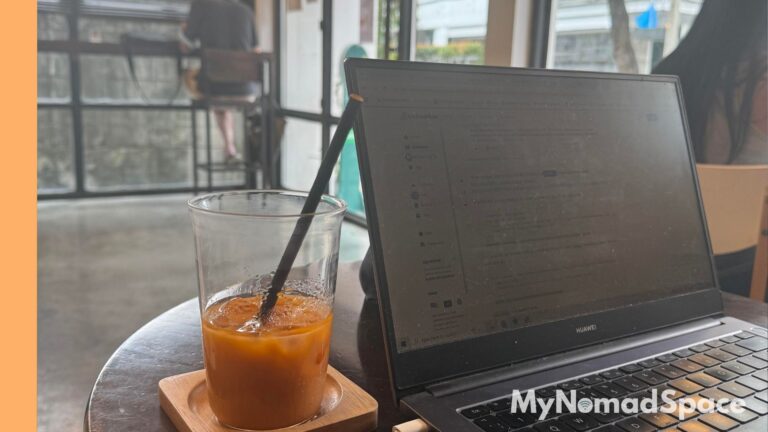
Bangkok is absolutely full of laptop-friendly cafes and coffee shops that are perfect for digital nomads and remote workers. Areas like Ari, Thonglor, Ekkamai and Phrom Phong are especially popular for those searching for cafes to work with Wi-Fi in Bangkok, offering comfortable seating and plenty of power outlets. Popular spots include Aribica Speciality Coffee in Ari (one of our favourite places to open the laptop!) and Casa Lapin in Thonglor, attracting both locals and foreigners looking to get work done.
If you plan to work for a few hours, be sure to buy a drink or some food to support the cafe or coffee shop, with drinks or snacks typically costing ฿50–฿150 (£1.60–£4.75). These work-friendly cafes and coffee shops in Bangkok usually operate during daytime hours, though the busier ones can get crowded mid-morning or on weekends.
Combining high-speed Wi-Fi, comfortable seating and a lively yet productive atmosphere, Bangkok’s cafes and coffee shops for remote work provide a flexible alternative to coworking spaces. If you’re after a quiet spot to focus or a social environment to network and feel the productivity energy flow, there’s definitely a cafe in the city to suit your style.
Coworking spaces
The coworking scene in Bangkok is thriving, with spaces designed for digital nomads, freelancers and remote professionals looking for a structured work environment. Popular areas include Sukhumvit, Silom, Ari, Ekkamai and Thonglor, where coworking spaces are often close to cafes, restaurants and public transport.
Membership options vary depending on the space and level of access. Hot desks typically start around ฿4,000–฿8,000 (£125–£250) per month, while dedicated desks can range from ฿7,000–฿12,000 (£220–£380). Private offices or larger team spaces often cost ฿15,000–฿30,000+ (£475–£950+) per month. Many spaces include high-speed internet, printing facilities, meeting rooms, phone booths and communal areas.
Some of the most popular coworking spaces include WeWork, The Hive, JustCo, Hubba and The Work Loft, attracting a mix of local professionals and international digital nomads. Spaces are usually open during regular office hours, with some offering 24/7 access for members. Many also host workshops, networking events and social activities, helping members connect and feel part of a community.
Coworking spaces are ideal for those who want a more professional environment than cafes and coffee shops provide, with reliable facilities and a community of like-minded people. Monthly rates and facilities make it easy to find a setup that fits your work style and budget.
Language and communicating in Bangkok
Thai basics
Thai is the official language of Bangkok, and learning a few basics can make everyday life much smoother. Simple phrases for greetings, politeness and transactions are particularly useful. “sawasdee” is used for hello, “khob khun” means thank you, and “chai” or “mai” are yes and no. When asking prices, “tao rai?” (how much?) comes in handy.
Polite particles like “khrap” (for men) and “kha” (for women) are important in most interactions, as they show respect and friendliness. Learning numbers in Thai is also useful for markets, taxis and street food. Even using a few simple phrases can make a big difference, helping you connect with locals and navigate the city with confidence.
For those wanting to dive deeper, Bangkok has a range of language schools catering to different levels and schedules. Popular options include AUA Language Center, Thai Language Hut and Berlitz Bangkok, all offering group classes or private lessons for beginners and advanced learners alike. Attending a class is a great way to build confidence, meet other learners and accelerate your Thai skills while living in the city.
English usage
English is widely understood in Bangkok, particularly in areas frequented by tourists, expats and digital nomads. Hotels, restaurants, coworking spaces and major shops often have staff who can communicate comfortably in English.
In public transport, signage in BTS stations, MRT stations, airports and major bus routes is typically in both Thai and English. Menus in restaurants and cafes in central areas often include English translations, though smaller local eateries and street food stalls may not.
While English is common in central Bangkok and business districts, fluency can vary outside tourist-heavy areas. Speaking clearly, being patient and combining English with gestures or simple Thai phrases can help ensure smooth communication.
Bangkok shopping and markets
Malls
Bangkok is famous for its shopping malls, and we absolutely love them all! Siam Paragon is one of the city’s largest and most iconic malls, featuring high-end fashion, restaurants, an aquarium and cinemas. Nearby, Siam Center and Siam Discovery focus on trendy fashion and lifestyle brands. MBK Center offers a more budget-friendly shopping experience with electronics, clothes and souvenirs, while Terminal 21 Asok is famous for its city-themed floors and well-regarded food court.
Along Sukhumvit, the EM District – comprising Emporium, EmQuartier and the new EmSphere – provides a mix of shopping, dining and entertainment, including Thailand’s first downtown IKEA. Central Embassy, Central Chidlom, Central Ladprao and Central Rama 9 are flagship malls from the Central Group, offering luxury brands, restaurants and cinemas. Riverside shopping is anchored by ICONSIAM, a large riverside complex with luxury boutiques and waterfront dining.
A newer addition, Central Park Bangkok, adds another modern shopping option to the city. We visited not long after it opened and really enjoyed the rooftop park overlooking the city. For those interested in niche or specialised shopping, Platinum Fashion Mall focuses on wholesale fashion, while River City Bangkok is known for art, antiques and collectibles.
Traditional markets
Beyond its modern malls, Bangkok’s traditional markets provide a more local shopping experience rooted in everyday Thai life. Chatuchak Weekend Market is the city’s most famous, with thousands of stalls selling everything from clothes and handicrafts to plants, homeware and antiques.
From experience, it’s best visited early or in the late afternoon to avoid the heat and crowds. Nearby, Or Tor Kor Market is renowned for its high-quality fresh produce, premium ingredients and traditional Thai snacks.
For a riverside market experience, Khlong Lat Mayom and Taling Chan markets showcase a more laid-back, community-focused atmosphere, with food stalls, local products and canal-side seating. Floating markets provide insight into Thailand’s trading traditions, where vendors sell produce and cooked dishes directly from boats. Damnoen Saduak is the most well-known, while Amphawa offers a more authentic feel with local vendors and fresh seafood.
Night markets
As the sun sets, Bangkok’s night markets come alive with colour, music and street food. These markets are as much about atmosphere as they are about bargains, with locals and visitors gathering to browse, dine and soak up the energy of the city after dark.
Jodd Fairs is one of the most popular night markets, known for its wide selection of street food, casual fashion and relaxed vibe. The Rot Fai (Train) Night Markets are favourites for vintage clothing, retro collectibles and classic Thai snacks, while Patpong Night Market in Silom is one of the city’s oldest, offering souvenirs and casual browsing alongside its lively surroundings.
Along the river, Asiatique The Riverfront combines a night market feel with waterfront views, featuring boutiques, restaurants and entertainment in a more polished setting. Together, Bangkok’s night markets showcase the city’s energetic side and are a great way to experience local flavours and nightlife in one place.
Read more:
Health in Bangkok
Hospitals and clinics
Bangkok is well known for its high-quality healthcare, with a wide range of hospitals and clinics catering to both locals and international visitors. Many facilities have English-speaking staff, modern technology and internationally accredited services. In fact, we’ve experienced the healthcare in Bangkok for one reason or another, and it has has never disappointed us.
Leading private hospitals include Bumrungrad International Hospital, Samitivej Hospital and Bangkok Hospital, all of which provide comprehensive medical services and specialist care. BNH Hospital, one of Thailand’s oldest private hospitals, is also highly regarded, particularly for expats. These hospitals often provide dedicated international patient centres to assist with appointments, insurance and travel arrangements.
For everyday and specialised needs, Bangkok has an extensive network of private clinics across the city, whether its general practice, dental care, dermatology or wellness services. Sexual health clinics are widely available, providing discreet testing and treatment, often with walk-in services and confidential care. The city is also a major hub for aesthetic and cosmetic medicine, with many clinics specialising in botox, fillers and skin treatments at competitive prices, using internationally approved products and experienced practitioners.
Pharmacies and over-the-counter medicine
Pharmacies are widespread throughout Bangkok and easy to access, from independent chemists to branches inside malls, hospitals and convenience stores. Many are open late, and some operate 24 hours. Pharmacists are generally well trained and can offer advice on common conditions without the need for a doctor’s appointment.
One notable difference compared to many Western countries is the availability of certain medications over the counter. For example, antibiotics and other prescription-only medicines back home are often accessible directly from pharmacies in Thailand, typically after a brief consultation with the pharmacist. This can be convenient for minor infections or familiar treatments, although it’s still important to use medications responsibly and follow professional guidance.
In addition to standard medicines, pharmacies commonly stock travel health items, pain relief, cold and flu remedies, skincare products and supplements. Prices are generally affordable compared to Western nations, and brand-name as well as generic options are widely available.
Health insurance and emergency services
Health insurance is obviously strongly recommended for anyone living in or visiting Bangkok, particularly when using private hospitals, where costs can add up quickly without coverage. Many international travel and expat insurance policies are accepted at major private hospitals, and some facilities can charge insurers directly. It’s important to check in advance what is covered, especially for pre-existing conditions, outpatient visits and elective treatments.
Emergency medical services in Bangkok are well developed, with both public and private options available. In an emergency, ambulances can be accessed through hospital emergency departments, and private hospitals often provide faster response times and English-speaking staff. The national emergency number in Thailand is 1669, which connects to public emergency medical services.
Major private hospitals operate 24-hour emergency rooms equipped to handle serious injuries and acute medical conditions. While public hospitals also provide emergency care, language barriers and longer waiting times can sometimes be an issue for visitors.
Water safety
Water safety is an important consideration in Bangkok. Tap water is treated but not considered safe for drinking due to possible contamination from aging pipes and local pollution. Most residents and visitors rely on bottled or filtered water for everyday use, including brushing teeth. Bottled water is inexpensive and widely available at convenience stores and supermarkets.
When it comes to ice, commercially produced ice used in drinks at reputable restaurants and cafes is generally safe. However, crushed or hand-chipped ice from street vendors or small stalls can sometimes cause illness, as it may be made from untreated or contaminated water.
Water used for cooking in reputable restaurants is typically safe. When staying in apartments or long-term accommodation, many people use water filtration systems or large refillable water bottles for added convenience and sustainability.
As for swimming, hotel pools and well-maintained facilities are safe and regularly treated. There are usually signs displayed next to swimming pools showing the current condition of the water for that day, including cleanliness and chemical levels, to ensure it is safe for use. However, swimming in canals and rivers is not recommended due to pollution and strong currents. You might also bump into some Asian water monitor lizards!
Air pollution
Air quality is another important consideration in Bangkok, especially during the cool season when pollution tends to spike. In January 2026, the city recorded some high PM2.5 levels, with an average of 58.1 µg/m³ on January 14, which is well above Thailand’s safety standard of 37.5 µg/m³. Certain districts, including Bang Rak (86.9 µg/m³), Pathum Wan (83.4 µg/m³) and Sathorn (78.5 µg/m³), reached levels that can affect health.
These pollution surges are typically caused by a mix of vehicle emissions, industrial activity, construction dust, agricultural burning and seasonal weather patterns that trap pollutants close to the ground.
Thailand has been taking steps to address the issue, including tightening vehicle‑emission standards, increasing air‑quality monitoring, restricting crop burning and issuing public health advisories on high‑pollution days. While progress is gradual, these measures aim to reduce the severity of seasonal smog.
For day‑to‑day life, many residents and visitors choose to wear high‑quality masks (such as N95 or KN95) during hazardous periods, especially when spending extended time outdoors. Most malls, cafes and indoor spaces have good air‑conditioning and filtration, providing a comfortable escape when pollution levels rise.
Bangkok culture and lifestyle
Festivals and events
Bangkok’s festival calendar is lively and diverse, reflecting the city’s rich cultural heritage. One of the most famous annual celebrations is Songkran, the Thai New Year in April, when the streets transform into playful water fights. Beyond the fun, the festival is deeply rooted in tradition, with locals visiting temples to make merit, pour water over Buddha statues and perform rituals that symbolise cleansing and renewal for the year ahead.
Another highlight is Loy Krathong, the Festival of Lights, held in November. During this event, thousands of small decorated floats, or krathongs, are released onto rivers and canals, creating a shimmering spectacle across the city’s waterways. The festival is a time for reflection and gratitude, with many also taking the opportunity to make wishes for the year to come. Temples and public spaces host cultural performances and traditional ceremonies, making it one of the most visually captivating experiences in Bangkok.
Bangkok also embraces celebrations from other communities, such as Chinese New Year, when Chinatown bursts to life with dragon parades, lion dances and fireworks. The Vijit Chao Phraya festival is another important event along the Chao Phraya River, celebrating the river’s historical and cultural significance with fireworks and a drone show, drawing both locals and tourists.
In addition to traditional festivals, Bangkok hosts cultural events throughout the year, including film festivals, design exhibitions and music performances. Even centuries-old royal ceremonies, such as the Royal Ploughing Ceremony, draw attention for their historical significance, marking important agricultural milestones with rituals and predictions about the year’s harvest.
Religious and traditional practices
Religion and tradition play a central role in everyday life in Bangkok. Buddhism is the dominant faith, and its influence is visible everywhere, from temples and Buddha statues to the daily rituals of monks collecting alms in the early morning. Many locals begin their day with merit-making, offering food or donations to temples as a way to cultivate good karma and spiritual balance.
Traditional ceremonies and festivals are closely tied to Buddhist and cultural practices. Visitors will often see locals participating in blessing rituals at temples, lighting incense or tying sacred threads during special occasions. Monks are highly respected, and it is customary to show politeness and follow temple etiquette, such as removing shoes and dressing modestly, when entering religious sites.
In addition to Buddhism, other faiths also contribute to Bangkok’s spiritual landscape. Chinese shrines, Hindu temples and Muslim mosques serve vibrant communities, and many religious events, such as prayers, processions and offerings, are open to the public.
Daily life
Daily life in Bangkok is a dynamic mix of tradition and modern living, with routines shaped by work, family, food and social interactions. The city comes to life from early morning, when street vendors set up their stalls, commuters fill the BTS Skytrain and MRT, and monks walk through neighbourhoods collecting alms. Locals often start their day with a quick breakfast from a street cart, such as rice porridge, noodle soup or fresh pastries.
Work hours typically follow a standard 9-to-6 schedule, though many small businesses, markets and service industries operate much longer. Bangkokians balance professional life with family and social activities, and communal meals, whether at home or in restaurants, are an essential part of daily life. Street food culture is not just for tourists. It’s a core aspect of everyday eating for locals.
Transportation is an integral part of life in the city. While the BTS, MRT, buses and taxis serve many, motorbikes and tuk tuks remain popular for short trips, especially in traffic-congested areas. Shopping, whether at modern malls or traditional markets, is another daily ritual for many, providing both necessities and leisure.
Despite the city’s pace, Bangkokians also find time for relaxation and socialising. Parks, riverside promenades, cafes and gyms provide spaces to unwind, while cultural and religious activities, from temple visits to local festivals, continue to play a role in everyday life.
Nightlife
Bangkok’s nightlife is iconic. There’s something for every taste, from lively entertainment districts to relaxed riverside bars. As the sun sets, the city transforms, with streets, rooftops and riverfronts buzzing with energy. Nightlife in Bangkok is not just about partying. It’s also about dining, socialising and enjoying the city’s vibrant atmosphere.
Areas like Sukhumvit, Silom and Khao San Road are famous for their bars, pubs and clubs, catering to locals and tourists alike. Rooftop bars provide spectacular views over the skyline, while jazz clubs, cocktail lounges and live music venues offer more intimate evenings. Many venues open late and stay active until the early hours.
For those who prefer a quieter experience, riverside and bars provide a more relaxed setting to enjoy drinks, street food or live music. Night cruises along the Chao Phraya River are also popular, combining sightseeing with dining and entertainment. Bangkok’s nightlife is a reflection of the city itself; diverse, energetic and full of surprises.
Is Bangkok safe?
General safety and crime
Bangkok is a city with a generally moderate level of crime. According to the most recent crowd‑sourced safety data for 2025 by Numbeo, the city’s crime index is around 39.3, with a corresponding safety index of about 60.7. These figures reflect perceptions of crime and personal safety by residents and visitors and place Bangkok in a similar range to many other major world cities.
Violent crime in Bangkok is relatively rare, but petty theft, pickpocketing and tourist‑oriented scams are among the most commonly reported issues, particularly in crowded areas such as transit hubs, markets and popular attractions. Streets and tourist zones are generally safe during the day, though it’s wise to keep valuables secure and stay aware of your surroundings. The Royal Thai Police maintain a visible presence in key areas, and there are dedicated tourist police units to assist international visitors.
While serious incidents do occur infrequently, they tend to be isolated and not directed at tourists. For example, a tragic shooting at a market in mid‑2025 resulted in multiple fatalities, highlighting that no city is entirely free from risk. Traffic safety is another everyday concern; road accidents happen frequently, so pedestrians should exercise caution when crossing streets and motorbike riders should always wear helmets.
Transportation safety
Alongside everyday road safety concerns, transportation in Bangkok requires attentiveness and common-sense precautions. The city’s roads are famously busy, with a mix of cars, buses, taxis, motorbikes, tuk tuks and bicycles sharing the streets, often in heavy congestion. Road accidents are far more common than crime-related incidents, making awareness of local traffic patterns essential for both drivers and pedestrians.
Public transport, including the BTS Skytrain and MRT subway, is generally very safe and reliable, with security personnel and CCTV in stations. Buses are affordable but can be crowded and less predictable, while river ferries provide a scenic and safe alternative to road travel. Motorbike taxis are convenient for short trips, but riders should always wear helmets and exercise caution in traffic.
Taxis are widely available and safe if licensed; it’s recommended to ensure the meter is used or agree on a fare beforehand to avoid disputes. Ride-hailing apps, as previously noted, are also popular and considered a secure option. Cyclists and pedestrians should remain vigilant, as traffic rules are not always strictly followed, and intersections can be extremely hazardous.
Scams
Like many major destinations around the world, Bangkok has its share of scams, ranging from small-time hustles to more elaborate schemes, so awareness and caution are key. Common scams target visitors in crowded areas, markets, transport hubs and popular attractions. One well-known example is the tuk tuk or taxi “overcharge” scam, where drivers may offer a tour at a seemingly low price but then take passengers to shops or add hidden fees. This is similar to the one we experienced!
Another frequent issue involves gem, tailor or electronics scams, in which tourists are persuaded to buy overpriced items with promises of high quality or investment potential. Pickpocketing and bag snatching can also occur in busy areas like Chatuchak Market, the Grand Palace and on public transport, often by opportunistic thieves targeting distracted visitors.
Street vendors or unofficial guides may sometimes use fake promotions or “closed” attractions to redirect tourists toward affiliated shops, restaurants or tours, taking advantage of unfamiliarity with the city. While these scams are usually non-violent, they can be frustrating and costly.
The best protection against scams is vigilance. Always agree on fares in advance, use reputable guides and services, secure personal belongings and be cautious of unsolicited offers. Tourist police are available in major areas and can provide advice or assistance if needed. By staying alert and informed, you can enjoy Bangkok safely while avoiding common pitfalls.
Travel and trips away from Bangkok
Ayutthaya Historical Park
A popular escape from the city is Ayutthaya Historical Park, located about 80 kilometres (50 miles) north of Bangkok. Once the capital of the Kingdom of Siam, Ayutthaya is now a UNESCO World Heritage site, famous for its temple ruins, ancient palaces and Buddha statues.
Visitors can explore the park by bicycle, tuk tuk or on guided tours, taking in highlights such as Wat Mahathat, Wat Phra Si Sanphet and the iconic Buddha head entwined in tree roots. The city’s blend of history, architecture and riverside charm makes it an easy and rewarding day trip or overnight visit from Bangkok.
Kanchanaburi
Another popular destination for a day or overnight trip is Kanchanaburi, located roughly two to three hours west of Bangkok. The province is best known for its historical significance during World War II, including the famous Bridge over the River Kwai and the Death Railway, which attract history enthusiasts from around the world.
Beyond its wartime landmarks, Kanchanaburi offers natural beauty with waterfalls, rivers and national parks like Erawan National Park, where visitors can hike and swim in emerald pools. The combination of history, nature and a slower pace makes Kanchanaburi a refreshing contrast to Bangkok’s bustling city life.
Pattaya
Pattaya is a vibrant coastal city located about two hours southeast of Bangkok, making it one of the most accessible beach destinations from the capital. Known for its lively entertainment and beachfront promenades, Pattaya also offers cultural attractions such as the Sanctuary of Truth and Wat Phra Yai (Big Buddha Hill).
Visitors can enjoy activities ranging from snorkeling and jet-skiing to strolling the energetic Walking Street or exploring local markets. Pattaya’s combination of sun, sea and city-style attractions makes it a popular choice for both day trips and getaways.
Hua Hin
Hua Hin is a coastal town roughly three hours southwest of Bangkok, providing a more tranquil getaway compared to the bustling city or Pattaya. Famous for its long sandy beaches, royal summer palace Klai Kangwon and picturesque Hua Hin Railway Station, the town combines relaxation with cultural sights.
The town delivers opportunities to sample fresh seafood at local markets, cycle along the shoreline or explore nearby vineyards and golf courses. Its peaceful atmosphere and easy access from Bangkok make Hua Hin a favourite for weekend trips and short escapes.
Koh Chang
Koh Chang is Thailand’s second-largest island, located about five to six hours southeast of Bangkok, near the Cambodian border. Known for its tropical landscapes, white-sand beaches and clear waters, the island has a mix of adventure and relaxation. Visitors can trek through dense jungle, visit waterfalls, snorkel or dive in coral reefs and explore fishing villages along the coast.
With a quieter, more natural vibe than some of Thailand’s busier islands, Koh Chang is ideal for those seeking a scenic escape from the city while still having access to things like restaurants and resorts.
Airports and easy travel connections
Bangkok is served by two major airports, making it a central hub for both domestic and international travel. Suvarnabhumi Airport (BKK) handles the majority of international flights and comes with modern facilities and numerous transport options into the city, including taxis and the Airport Rail Link. Don Mueang Airport (DMK) primarily serves domestic and low-cost carriers, such as AirAsia, providing convenient access for travellers connecting to other parts of Thailand.
Both airports are well connected to Bangkok’s public transport network. For regional trips, domestic flights to popular destinations such as Chiang Mai, Phuket, Ko Samui and Krabi are frequent and affordable, while trains and long-distance buses provide additional options for exploring nearby provinces like Ayutthaya, Kanchanaburi and Hua Hin. This strong transport infrastructure makes Bangkok a convenient base for discovering both the city itself and the wider region.
Visas for Bangkok
DTV
Thailand’s Destination Thailand Visa (DTV), launched in 2024, is designed for digital nomads, remote workers and freelancers who want to live and work in Thailand for longer periods without constantly renewing tourist visas. The visa is valid for five years and lets you stay in the country for up to 180 days at a time, with the option to extend each stay for another 180 days. It’s a flexible way to enjoy everything Thailand has to offer while keeping up with work.
Getting the DTV requires proof that you work remotely or independently and some financial evidence to show you can support yourself while living there. The application typically costs around 10,000 THB (roughly £235), with possible extra fees for extensions or dependents. It also allows spouses and children to join in some cases. Overall, it gives online workers a stable, legal way to experience life in Thailand without the hassle of short-term tourist visas.
Tourist visas
For most travelers, Thailand offers a variety of tourist visa options, along with a generous visa-free policy for citizens of many countries. Depending on your nationality, you can enter Thailand without a visa for anywhere from 30 to 90 days. For longer stays, tourist visas can typically be obtained in advance at Thai embassies or consulates, allowing for stays of 60 days or more, often with the option to extend once at a local immigration office.
While tourist visas are primarily intended for leisure, business trips and short-term professional visits are generally allowed, such as attending meetings, conferences or exploring potential investments.
However, there is some ambiguity around working in Thailand on a tourist visa, and it’s not officially permitted to earn income from local sources. Still, for visitors planning tourism-related activities, training or short-term business engagements, tourist visas provide a simple and flexible way to legally spend time in the country without the long-term commitment of other visa types.
Long-term or work visas
Thailand also offers several long-term and work visa options for people who want to stay beyond the usual tourist limits. These include the Non-Immigrant B visa for employees of Thai companies, the Non-Immigrant O visa for retirees and specialised options for investors or entrepreneurs. Unlike short tourist stays, these visas are designed for people with a purpose in Thailand – whether it’s building a career, running a business or settling into retirement – and usually require more paperwork, including proof of income, employment contracts or company registration.
While the process can feel a bit bureaucratic, the payoff is worth it. Holders can legally stay in Thailand for months or even years at a time. Extensions are generally possible, though they often involve periodic reporting to immigration. These visas aren’t for casual sightseeing. They’re for anyone serious about making Thailand their temporary or semi-permanent home, from teachers and entrepreneurs to retirees and professionals on assignment. With the right preparation, a long-term or work visa opens the door to a much deeper experience of life in the country.
It’s also worth being cautious. Working on a student visa, for instance, is technically illegal, and Thai authorities have been cracking down on people trying to “game the system” with repeated visa runs or overstays. It’s one of those things that seems convenient in theory but can cause serious trouble in practice, so it’s best to stick by the rules and avoid unnecessary risks.
Taxes
Working from Thailand, whether on the Destination Thailand Visa (DTV) or another long-term visa, comes with some important tax considerations. In Thailand, anyone who stays in the country for 180 days or more in a calendar year is generally considered a tax resident. Once that threshold is crossed, worldwide income may become subject to Thai taxation, though income earned from foreign sources is usually only taxed if it is brought into Thailand in the same year it was earned.
For digital nomads and remote workers, this means most earnings from overseas clients or employers may not be taxed immediately unless you transfer them into Thai bank accounts within the same tax year. However, any income earned from work physically performed in Thailand, such as local consulting, teaching or business services, is considered taxable.
The tax system can be complex, but with proper planning, many remote workers are able to enjoy life in Thailand while staying compliant. When it comes to tax, it’s always best to discuss these matters with qualified experts. We’re simply sharing general information here and aren’t liable for any decisions you make based on this content.
Fitness in Bangkok
Gyms and fitness centres
The fitness scene in Bangkok is currently thriving, with a wide range of gyms and training hubs that cater to different workout styles and lifestyles. For strength training, weightlifting or functional fitness, Muscle Factory in Phra Khanong is often praised for its excellent equipment and spacious layout, while UnReal Gym on Sukhumvit is a popular choice for comprehensive workouts including free weights and cardio zones.
If you’re looking for well‑rounded, modern fitness centres, places like Iron Fit, FM (Fitness Mall Bangkok), and Iron Hive Gym provide friendly environments with good equipment and classes.
On the more premium and flexible side, Jetts 24 Hour Fitness Stadium One remains a popular choice thanks to its 24/7 access and no contract model, ideal for professionals with unpredictable schedules or travellers staying for a few weeks. Boutique and luxury gym experiences continue with places like The Standard Gym and Fitness One, which blend fitness with lifestyle services.
Other well‑rated hubs such as BANGKOK TRAINING CENTER and Encore Training Club pepper the city for those who prefer community‑oriented or specialised training spaces. Memberships in major chains like Fitness First and Virgin Active are also widely available throughout Bangkok, offering classes, pools and wellness facilities alongside a gym floor.
Yoga and pilates studios
Thailand’s capital has quietly become a haven for anyone looking to stretch, strengthen and slow down amid the city’s constant hustle and bustle. Yoga studios like Yogatique Bangkok provide a calm, sunlit spaces where you can focus, giving you a break from Bangkok’s chaos for an hour or two.
On the Pilates side, studios such as Pilates Bangkok – The Balance Pilates & Physio and Pilates Plus Bangkok bring a hands-on, supportive approach to core work and flexibility, with instructors who make even the toughest reformer sessions feel manageable. For those who prefer a more intimate vibe, spots like Elite Pilates Studio and Vanni Pilates Bangkok keep classes small and personalised, so you’re never just another face in the crowd.
Some studios blend the best of both worlds, like Gaya Yoga Pilates Studio or Star Pilates Bangkok, letting you flow from a strengthening Pilates session into a gentle, restorative yoga class without leaving the space. And if you’re a night owl or early riser, Mynd Pilates, Bangkok has flexible hours and a friendly community, so it’s easy to squeeze workouts into a busy day.
Muay Thai
Bangkok remains one of the world’s best cities to immerse yourself in Muay Thai training. If you’re looking to level up your skills or simply want a good sweat and learn real techniques, you’ll find it all here. There’s a wide variety of gyms and academies across the city, from well‑established fight clubs to neighbourhood training spaces.
Watchara MuayThai Gym and Krudam Muay Thai School are strong local favourites known for solid coaching and a friendly atmosphere, while Project H Muay‑Thai Gym (Samyan Mitrtown) and FITFAC Muay Thai Phloen Chit mix traditional techniques with accessible class structures that suit beginners through to more experienced fighters.
For a classic experience steeped in Bangkok’s fight culture, Khongsittha Muay Thai and Thonglor Muay Thai provide training communities, and Bangkok Fight Lab – Jiu‑Jitsu MMA & Muay Thai blends Muay Thai with broader martial arts options if you want cross‑training. Even iconic venues like Rajadamnern Muay Thai Stadium are part of the city’s fight scene, where you can watch real bouts and soak up the atmosphere after class.
A big draw recently has been how Muay Thai training ties into Thailand’s Destination Thailand Visa (DTV). As previously noted, this particular visa lets people stay in the country for up to five years with 180‑day entries tied to activities like Muay Thai courses and remote work, meaning you can combine serious training with long‑term living without the constant churn of short‑stay visas.
Many gyms and training camps now provide the letters and documentation needed to support DTV applications, which makes it easier for foreigners passionate about the sport to settle in Thailand longer and train consistently.
Parks for running
Thailand’s capital has some surprisingly peaceful green spaces where runners – from casual joggers to more serious trainers – can escape the traffic and heat. Lumpini Park is probably the most well‑known, with a roughly 2.5 km loop around its lake that’s perfect for early‑morning or evening runs, and plenty of shaded paths and water stations to keep you going.
Benchakitti Park right next door now connects to Lumpini via the “Green Mile”, providing a longer, scenic route with skyline views that’s become a favourite for local runners. Vachirabenjatas Park (Rot Fai Park) in North Bangkok has a 2.5–3 km circuit and links with Queen Sirikit and Chatuchak parks to create even longer green routes if you want to really build distance.
Suan Luang Rama IX Park and Nong Bon Water Sports Center to its side both offer wide, quieter tracks around a lake. These are ideal for longer runs or weekend training sessions. There are also smaller, local parks like Santiphap Park and Romaneenart Park sprinkled around the city if you prefer shorter, more relaxed runs close to home.

Making friends and connecting in Bangkok
Expat and local communities
Bangkok has a large and diverse expat community, with people from around the world living and working in the city. Many gravitate to areas like Sukhumvit, Thonglor, Ekkamai, Silom and Ari, where cafes, international restaurants, gyms and coworking spaces make daily life comfortable. These areas offer a mix of modernity and local culture, helping expats settle in while still experiencing the city’s vibrancy.
Community life in Bangkok goes far beyond where people live. Most newcomers find their footing through active online communities, especially Facebook groups, platforms like Expats in Bangkok and countless hobby‑specific groups that organise meetups, dinners and casual hangouts. Platforms such as InterNations also host regular events, language exchanges, sports meetups and networking nights.
Networking
The city has a lively networking scene for both professionals and entrepreneurs. Coworking spaces regularly host events, workshops and meetups where you can meet fellow freelancers, start-up founders and remote workers. Industry-specific groups, such as tech, marketing or finance meetups, also run events through platforms like Meetup or Facebook.
Beyond formal events, casual networking happens in cafes, bars and coworking spaces where expats and locals gather. Language exchanges, fitness classes and community interest groups provide informal opportunities to meet people while enjoying shared activities. Put yourself out there just a little, and Bangkok makes it simple to build a solid network.
Social activities
Thailand’s capital provides a plethora of social activities to keep you busy when the laptop is closed. From weekend markets and rooftop bars to art galleries and food festivals, there’s always something happening. Cooking classes, craft workshops and cultural tours provide hands-on ways to explore Thai traditions while meeting new people.
Outdoor and group activities are also popular. Many residents join running clubs in Lumpini or Rot Fai Park, take yoga and Pilates classes or sign up for Muay Thai sessions. Sports leagues, coworking events and hobby groups – from photography to language exchanges – provide easy ways to combine socialising with personal growth.
Whatever you’re in the mood for – whether its a relaxed evening out or a more active community event – Bangkok’s social scene makes it easy to get involved and feel part of the city.
Is there a topic or section you think should be included in this article but don’t see? Let us know and we’ll happily write it up and add it in. If you’ve spotted anything that’s out of date – maybe a cafe or gym has closed – just tell us and we’ll update it. You can contact us here.