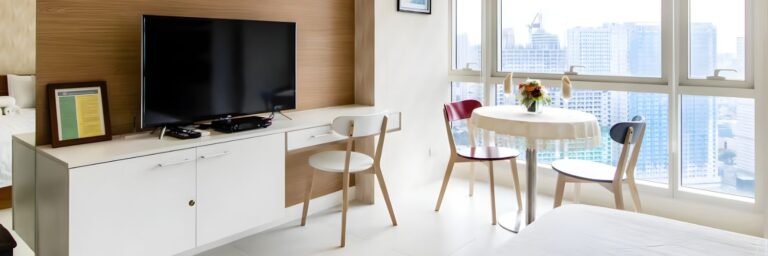
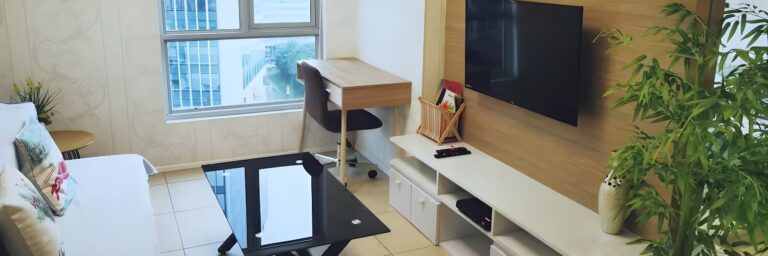
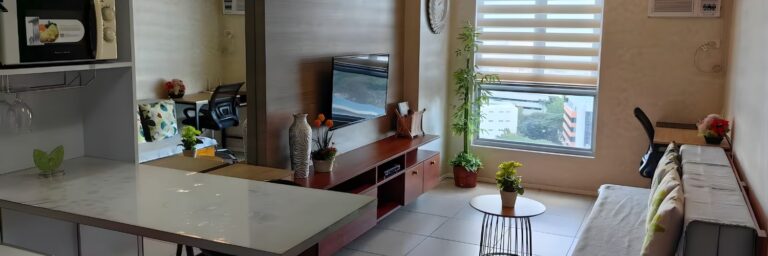
Manila is the capital of the Philippines and one of the most densely populated cities in the world. Situated on the eastern shore of Manila Bay, the city is known for its layered history, electric street life and diverse culture forged through centuries of global influence. If you’re looking to stay and work online in the city, Manila offers decent average Wi-Fi speeds, an abundance of spaces to make a base and easy access to both historic landmarks like Intramuros and experiences such as rooftop bars and Filipino street food. Overall, Manila delivers constant energy, making it an ideal base for working travellers who excel in a bustling city.
Popular Locations
Popular areas to stay for working remotely in Manila include Makati, Bonifacio Global City (BGC) and Poblacion.
According to Numbeo, the estimated average monthly cost of living in Manila (excluding space to stay) in 2026 is £450-£550 ($600-$700USD) for one person.
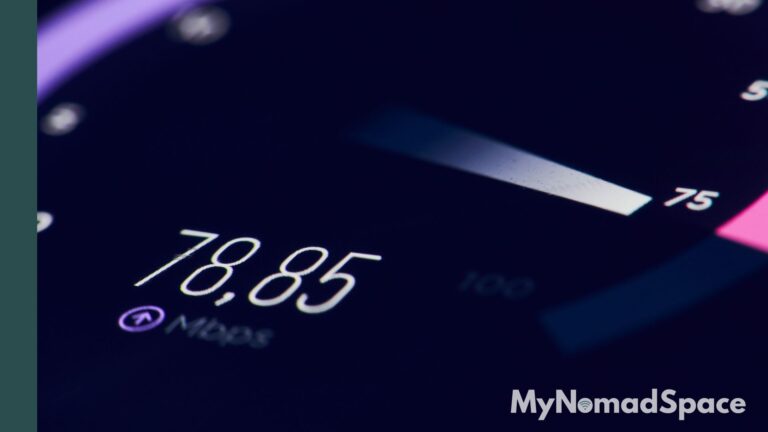
Typical Wi-Fi speeds in Manila are around 78 Mbps download and 35 Mbps upload, according to TestMy.net.
My Nomad Space Tip
Don’t miss sampling halo-halo, a beloved Filipino dessert layered with shaved ice, sweet beans, jellies, fruit and leche flan.
Discover Trusted Work-Friendly Stays with Verified Wi-Fi Speeds in Manila
Explore top-reviewed accommodation for remote work in Manila with verified Wi-Fi speeds – options for digital nomads, remote workers, business travellers, workcationers and anyone making work happen from anywhere in the world.
Current Listings in Manila
0
Loading...
No Records Found
Sorry, no records were found. Please adjust your search criteria and try again.
Manila is served by Ninoy Aquino International Airport (MNL), located about 20–40 minutes from most central districts with access by taxi, shuttle and rideshare.
Closest Train Station
Manila has no intercity passenger train service. Rail transport is limited to the LRT and MRT lines, which connect major districts across Metro Manila.
Closest Bus Station
Long‑distance and regional buses operate mainly from the Paranaque Integrated Terminal Exchange (PITX), Cubao bus terminals and Pasay bus terminals, offering routes across Luzon and to ferry connections for the Visayas and Mindanao.
Cafes & Coworking
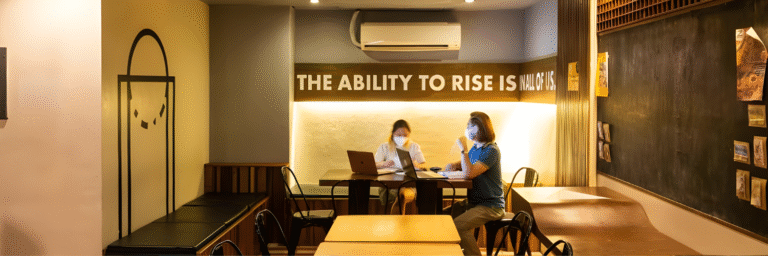
Manila has a strong cafe and coworking scene, especially around Makati, BGC, Ortigas, and Quezon City, supported by the city’s tech and remote‑work communities.
Groceries
Groceries are easy to find across the city, with major options including SM Supermarket, Robinsons Supermarket, Landers, S&R and numerous convenience stores.
Getting Around
Manila is busy and spread out, so most travel is handled using taxis, rideshares, jeepneys, buses and the LRT/MRT. The main roads and expressways make travel between Makati, BGC and Ortigas simple.
We use cookies at My Nomad Space to improve functionality, analyse site traffic and deliver a smoother journey across our pages. Your consent helps us make every visit more seamless, whether you’re browsing from home or on the road.
Functional
Always active
The technical storage or access is strictly necessary for the legitimate purpose of enabling the use of a specific service explicitly requested by the subscriber or user, or for the sole purpose of carrying out the transmission of a communication over an electronic communications network.
Preferences
The technical storage or access is necessary for the legitimate purpose of storing preferences that are not requested by the subscriber or user.
Statistics
The technical storage or access used exclusively for statistical purposes helps us understand how visitors use My Nomad Space. These insights - provided through Google Analytics - guide us in improving the site and creating a smoother journey for our community.The technical storage or access that is used exclusively for anonymous statistical purposes. Without a subpoena, voluntary compliance on the part of your Internet Service Provider, or additional records from a third party, information stored or retrieved for this purpose alone cannot usually be used to identify you.
Marketing
The technical storage or access may be used to display third-party content, such as Instagram embeds, which can set their own cookies. These help show posts and media directly within My Nomad Space, so you don’t have to leave the site to stay inspired on your journey.